
1. ROI's Core Technique: What is Deep Plane?
The success of a facelift depends on how the thin fascia beneath the skin — the SMAS (Superficial Musculoaponeurotic System) — is handled.
The Deep Plane refers to the layer immediately beneath the SMAS.
ROI Plastic Surgery performs lifting through precise dissection of this deeper layer.
Why does Deep Plane dissection matter?
Safety
The deep plane is a very safe space where major nerves and large vessels do not run.
Minimal Bleeding & Fast Recovery
Because it is an avascular plane with almost no blood vessels, intraoperative bleeding is minimal — resulting in less bruising and swelling, and faster recovery.
2. The Key to a Successful Facelift: Tension-Free Lifting
Skin tissue is firmly anchored to deeper structures by multiple retaining ligaments.
Without releasing this resistance, a satisfying lifting result is impossible.
Only when all the resistance holding the skin beneath the SMAS layer is fully released
can the tissue be lifted naturally and beautifully.
The Main Cause of Scarring: Excessive Skin Tension
The main reason most facelifts fail or leave severe scars
is that the deep resistance is not released, and the skin is forcibly pulled instead.
If the skin is sutured under strong tension, the wound is constantly pulled apart by the recoil force.
This force causes the suture line to spread open, leading to wide and severe scars.
The ROI Approach
Deep Plane dissection fully releases the resistance.
With no resistance, the tissue lifts up easily — without forceful pulling.
- ✓ Maximized Effect: Because no excessive tension is placed on the skin, scarring is minimized and the lifting effect is maximized.
- ✓ Minimized Swelling: Subcutaneous dissection is minimized, and intraoperative internal compression using surrounding tissue further reduces swelling.
3. Finding the Optimal Lifting Vector
Every patient has a different facial shape and a different degree and direction of sagging.
Therefore, the lifting direction (vector) is critical to the surgical outcome.
ROI Plastic Surgery does not apply a uniform direction to every patient.
During surgery, we test multiple directions at each point to find
the most effective and most beautiful optimal vector for each individual — and perform a fully customized lift.
4. Surgical Information
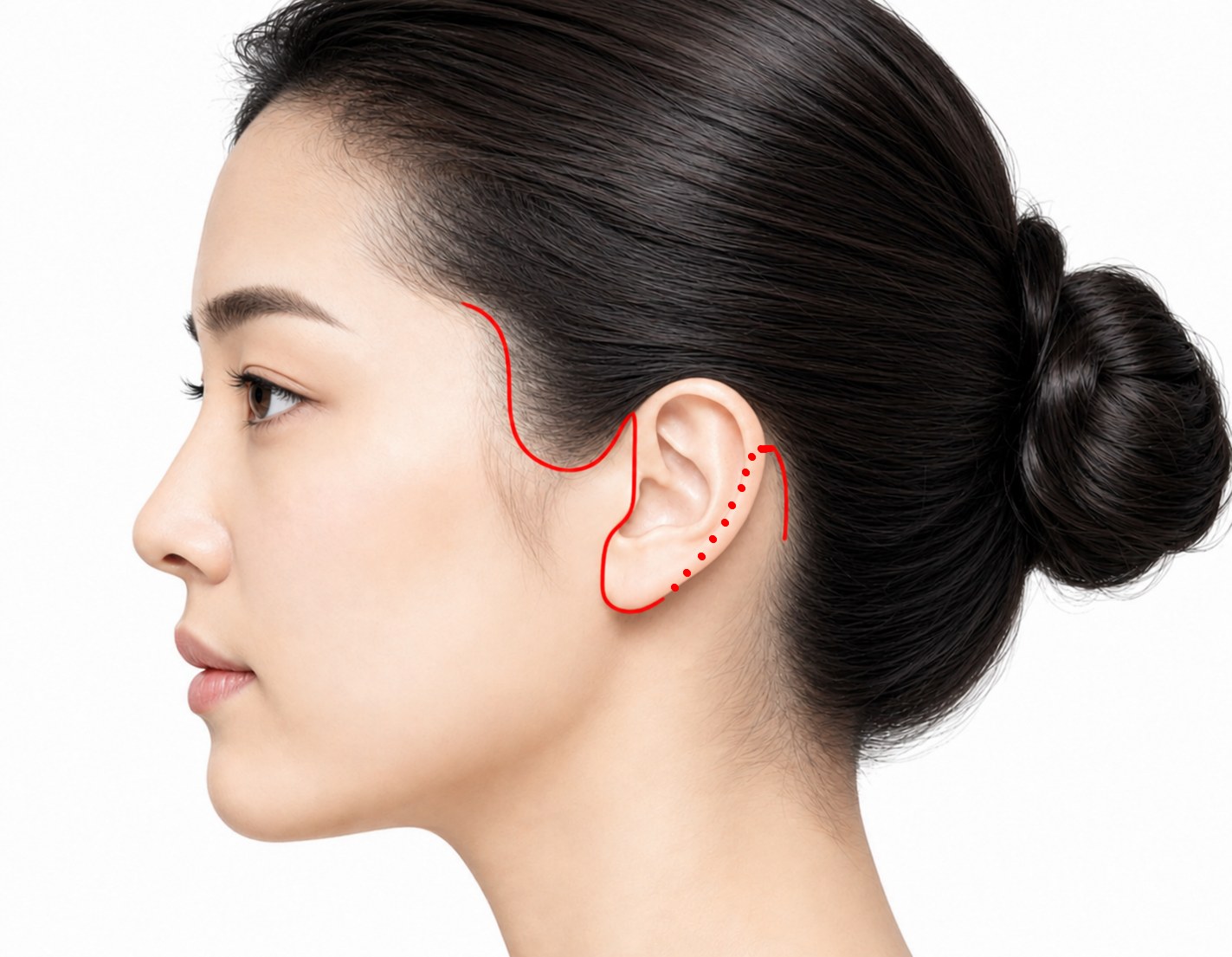
Facelift Incision Lines
Incisions follow the natural anatomy of the hairline and ear, and are carefully sutured to keep scars as inconspicuous as possible.
Facelift vs. Neck Lift
The area below the jawline (double chin, sagging neck skin) is strictly speaking not part of a facelift — it belongs to a Neck Lift.
- • For younger patients with no sagging below the jawline, a neck lift may not be needed.
- • However, many patients rarely see their own profile in detail and don't realize how pronounced their double chin or jawline sagging actually is.
Whether to combine a neck lift with a facelift for higher satisfaction is best decided through a precise consultation with the surgeon.
5. Recovery Guide
Recovery time may vary depending on individual health and constitution.
Day 1 after surgery
You must come in for a dressing change. Whether additional visits on Day 2 or 3 are needed is decided based on your condition. Patients with a good early course may handle self-dressing at home and return on the suture removal day.
Day 12 after surgery
All remaining sutures are removed.
Swelling Course
For healthy patients without significant comorbidities, the Deep Plane approach typically allows major swelling to subside by Day 12, and the swelling is often less severe than expected.
Final Result
By about 1 month after surgery, the surgical signs are minimal and the appearance looks natural in most cases. As residual swelling subsides, the result settles into an increasingly beautiful contour; fully settling can take 6 months or more, depending on the individual.
Note: Bruising, swelling, and changes in sensation vary by individual. A return-to-activity plan tailored to your occupation and lifestyle will be discussed during consultation.
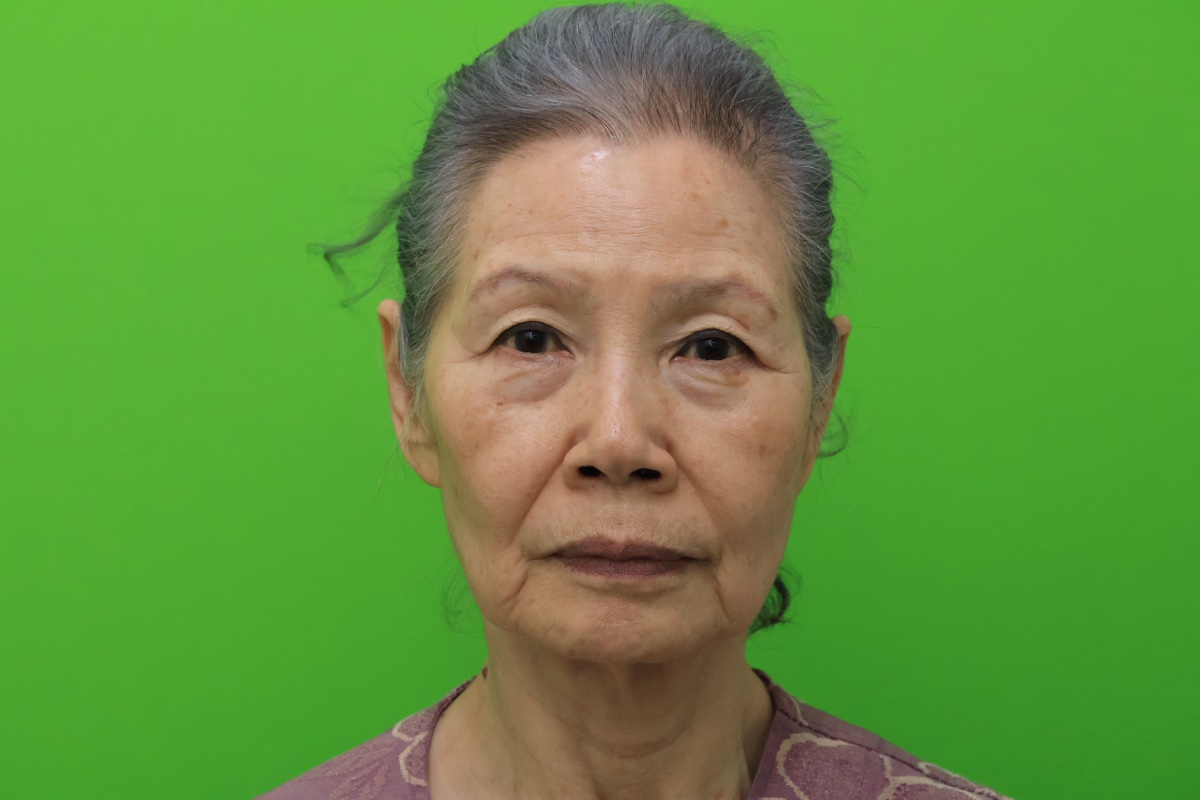
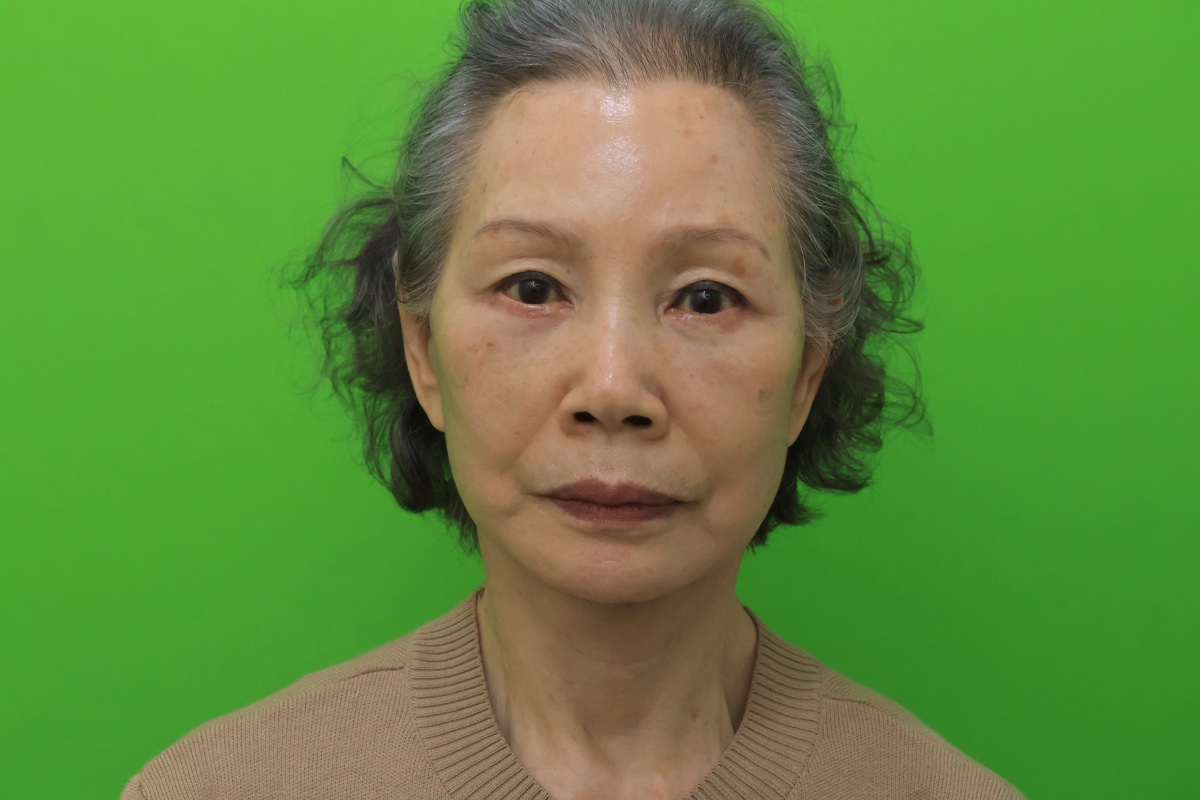
Before & After Photos
※ Published with patient's written consent (Korean Medical Act, Article 56).
Female, age 81 · Facelift + Neck Lift + Endoscopic Brow Lift + Lower Blepharoplasty (Comprehensive Anti-Aging)
Photographed: 5 weeks post-op
Procedure
Facelift + Neck Lift + Endoscopic Brow Lift + Lower Blepharoplasty — four procedures performed in a single session (comprehensive facial anti-aging)
※ Recovery stage note: 5 weeks is still mid-recovery; some swelling and faint bruising may remain. The result continues to settle naturally over 6+ months post-op, with individual variation.
Side effects · Important precautions
- Possible side effects: swelling, bruising, transient numbness or altered sensation, scarring at incisions, temporary hair changes near follicles in the dissection area.
- Rarely: transient facial nerve weakness (typically recovers), hematoma, infection, or wound-healing issues.
- Older patients may experience slower recovery; overall health status influences recovery pace.
- Recovery: 2–3 weeks for return to daily life; full settling over 6 months or more. Multi-procedure surgery generally needs longer recovery than a single procedure.
- Outcomes vary with individual skin elasticity, bony structure, degree of aging, and lifestyle.
- This photo is published un-mosaicked with patient's written consent. Unauthorized duplication or redistribution is prohibited.
Notice: All photos are published with the patient's written consent, and surgical outcomes may vary individually. More cases on Instagram @roisurgery.
Book a Facelift Consultation
Experience natural and beautiful transformation
with ROI Plastic Surgery's Extended Deep Plane technique.