
Hello, I'm Dr. Youngkee You, lead surgeon at ROI Plastic Surgery.
Today I want to share a case from a woman in her late 30s who had been distressed for years because one side of her under-eye area would bulge dramatically — but only when she smiled.
She had already consulted at multiple clinics before coming to us, and the answer was almost always the same — "It's a muscle problem, surgery can't fix it." She came to us with very low expectations, more out of curiosity than hope.
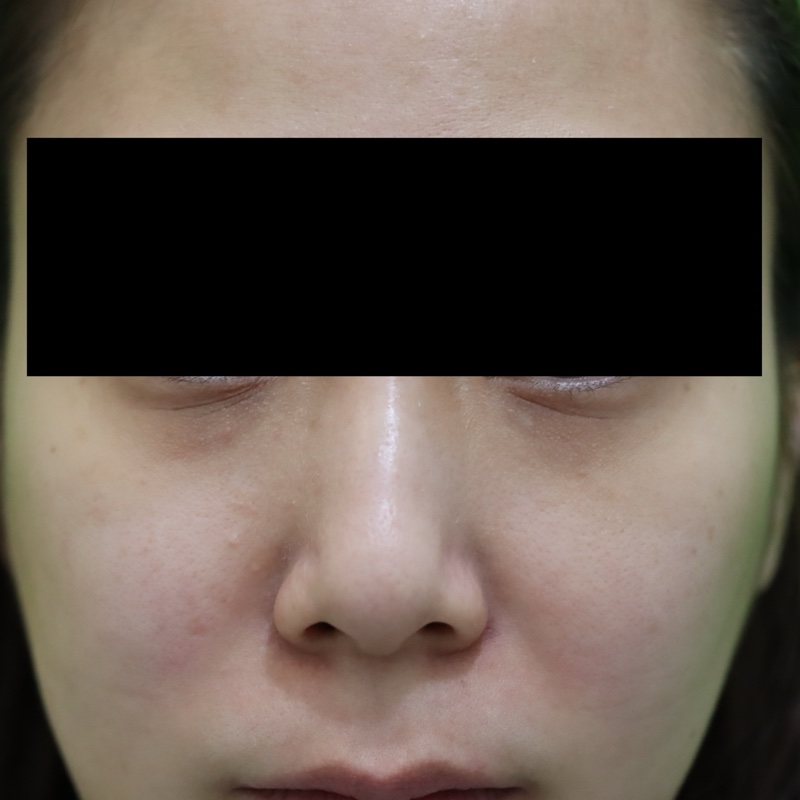
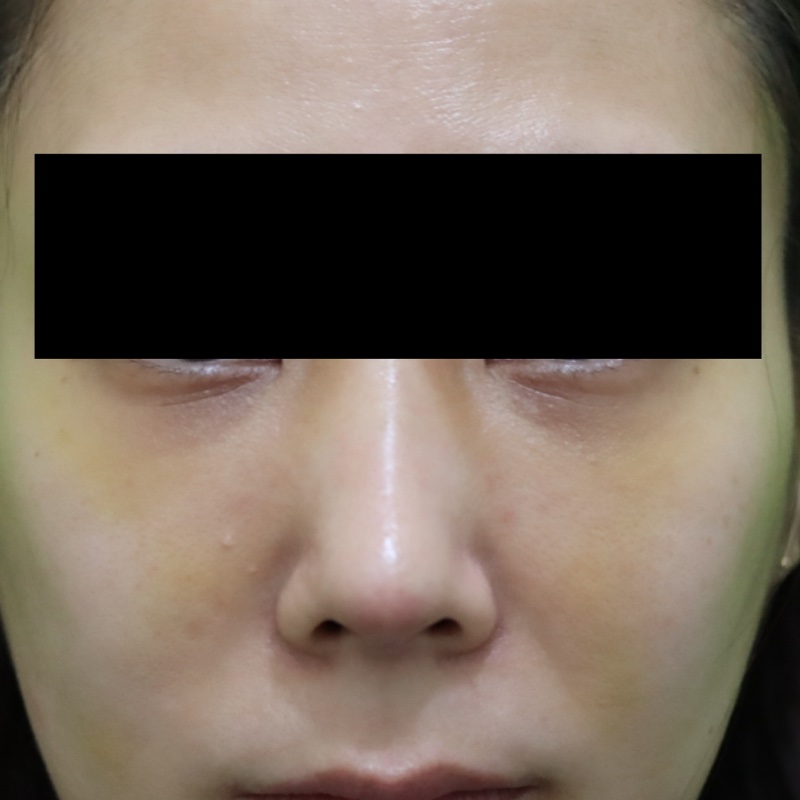
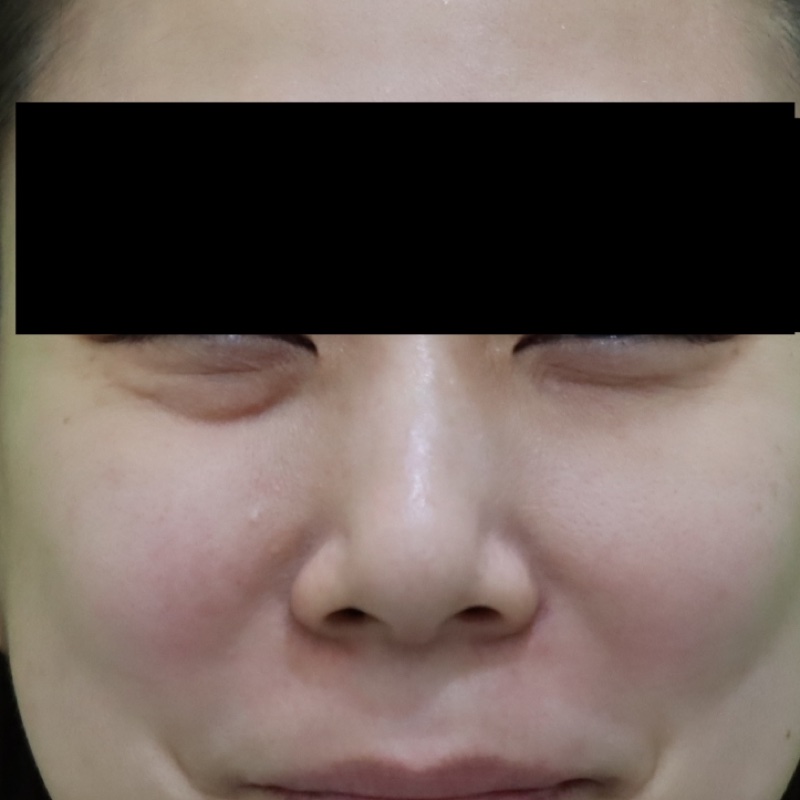
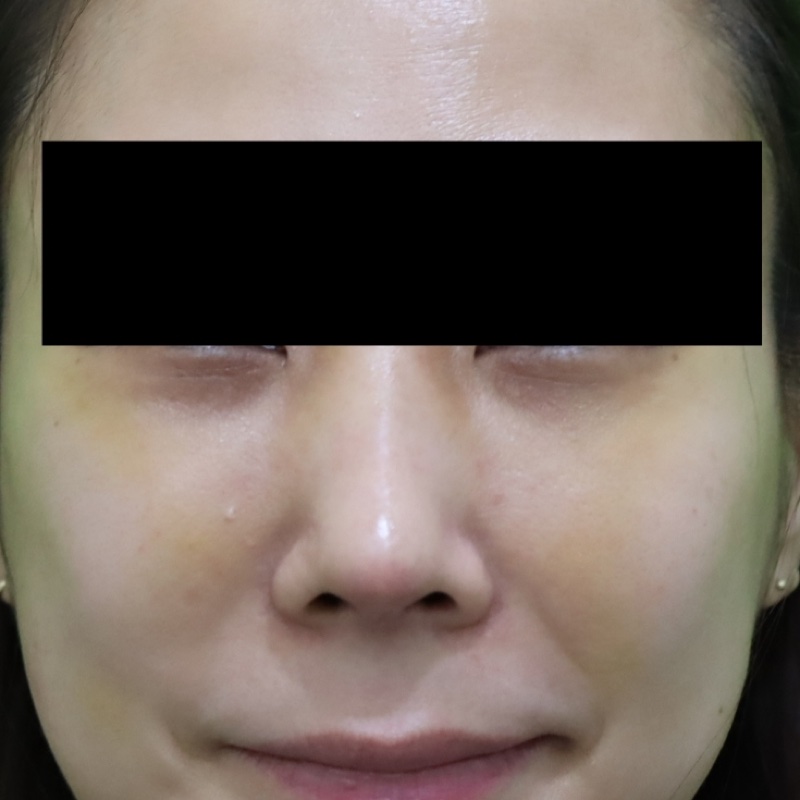
The bulging fat is barely visible in neutral, but when smiling the patient's right (image left) side bulges out clearly.
Fine in neutral, but bulging only when smiling — why?
Look at the photos again. In neutral expression, dark circles and pigmentation are visible, but the bulging fat is barely noticeable. The moment she smiles, however, one side of the under-eye area pops out.
In cases like this, it's not simply a muscle problem. The diagnosis needs to be revisited.
The real diagnosis — adhesion between muscle and fat
When we smile, the orbicularis oculi muscle (the muscle ring around the eye) contracts, and the small bulge of the "aegyo-sal" (under-eye plumping) becomes more visible. That's a normal, even charming effect.
The problem lies just beneath that. In this patient's case, the aegyo-sal itself was normal in size, but the fat layer underneath was tightly adhered to the orbicularis oculi muscle. So every time the muscle contracted, the bonded fat was dragged down with it, creating the dramatic bulge.
In other words, the muscle itself wasn't the issue — the adhesion between the muscle and the fat was. This kind of case can absolutely be improved through under-eye fat repositioning surgery. What matters is how the dissection is done.
The surgical key — leaving no adhesion behind
We chose the transconjunctival approach, going in through the inner conjunctival lining of the eye, so no skin incision was made and no external scar remains.
During surgery I genuinely caught myself thinking, "Why is this adhesion so strong here?" — the muscle and fat were unusually fused. I suspect this is exactly why other clinics had told her surgery wasn't an option: releasing that adhesion fully is technically demanding.
The point of this surgery wasn't just to reposition fat — it was three steps performed cleanly:
- Release the adhesion between orbicularis oculi and the underlying fat completely, from top to bottom, without leaving any residual band
- Reposition the released fat into the correct anatomical pocket
- Close in a way that prevents the adhesion from reforming
If even a small portion of the adhesion is left behind, the fat gets dragged down again with every smile, and the bulge returns.
10 days post-op — the patient's reaction
Surgery went smoothly. At the 10-day follow-up, she smiled openly for the first time in years.
"I used to unconsciously cover the area under my eye whenever someone took a picture or I had to smile in public. That habit is gone now."
What stayed with me most was that — beyond the surgical outcome itself — what she celebrated most was the disappearance of a small daily habit she had carried for years.
Closing — same diagnosis, very different outcomes
"Under-eye fat repositioning" sounds like one procedure with one definition. In practice, surgeons differ widely in how deeply they dissect, how thoroughly they release adhesions, where they reposition the fat, and how they close.
That's why the same diagnosis can yield very different results, and being told "surgery can't help you" at one clinic doesn't mean another surgeon will give you the same answer.
If your under-eye bulges only when you smile, or you've been told elsewhere that surgery won't work — it may be worth getting the diagnosis re-evaluated. If the underlying issue is adhesion and repositioning rather than pure muscle activity, there's a real possibility surgery can help.
Procedure & safety information
- Procedure
- Under-eye fat repositioning — transconjunctival approach, no skin incision, accessed through the inner conjunctiva to release orbicularis oculi-fat adhesion and reposition the fat
- Patient
- Female, late 30s
- Photographs taken
- Before / 10 days post-op
- Possible side effects
- Bleeding, bruising and swelling (typically 1–2 weeks), conjunctival swelling/irritation, transient dry-eye sensation, asymmetry, pigmentation, possibility of recurrence (with weight change or aging), rarely ocular irritation or transient visual disturbance.
- Aftercare notes
- Regular ophthalmologic follow-up recommended, avoid sauna and vigorous exercise during recovery, UV protection.
— Youngkee You, M.D.
Need a consultation?
Reach us anytime via KakaoTalk, WhatsApp, or phone.